In this first Q-Neko blog, we move beyond formal announcements to explore the vision behind Q‑Neko through the voices of its coordinators Mikael Johansson from CSC - IT Center for Science and Masahiro Horibe, Deputy Director at the Global Research and Development Center for Business by Quantum-AI Technology (G-QuAT), National Institute of Advanced Industrial Science and Technology (AIST). What motivates this collaboration? What challenges lie ahead? And how will this partnership translate into tangible impact across science, industry, and society? Through this conversation, we aim to offer a more personal and strategic look at how Q‑Neko is shaping the future of quantum technologies, advanced computing and international research cooperation.
From your perspective, what makes the EU–Japan partnership in Q‑Neko uniquely valuable?
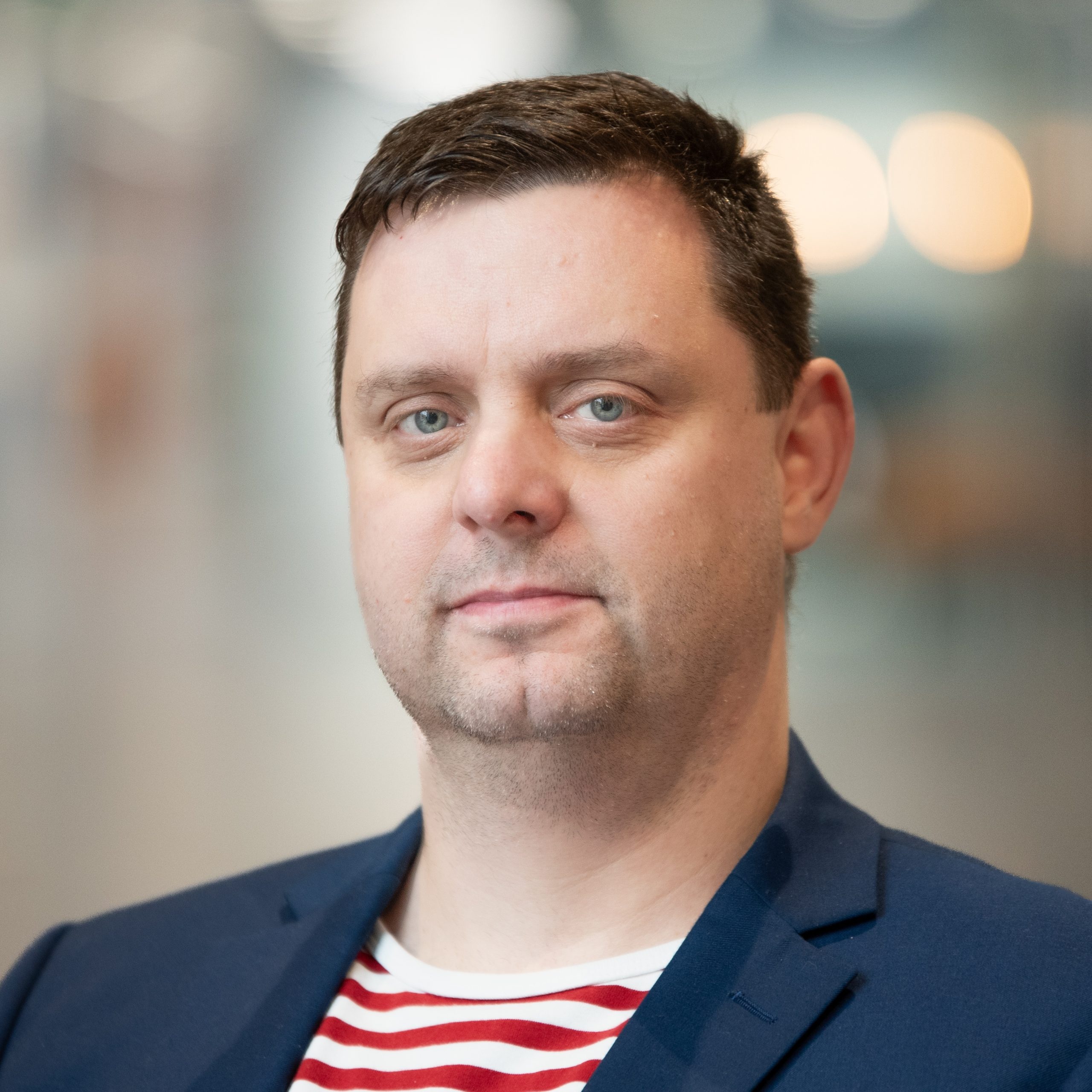
Mikael Johansson
The unique value of Q-Neko is that it creates a structured bridge between two regions that are both highly ambitious in quantum technologies, but who bring different ecosystems, infrastructures, and ways of working to the table.
For Europe, quantum computing is closely connected to large-scale research infrastructures combining HPC, AI, and quantum computing, as well as strong application communities. Japan brings world-class expertise in device development and industrially interesting use cases. Both are strong on hardware development, in complementary ways. What makes Q-Neko especially valuable is not only that these strengths are complementary, but that the project gives us a concrete framework for making them work together in practice.
Efficient integration of HPC, AI, and quantum computing cannot be solved by one institution or one country alone. It requires shared architectures, common benchmarks, interoperable software, and trust between teams. By working together from an early stage, Europe and Japan can help shape how hybrid, quantum-accelerated supercomputing systems are designed, evaluated, and used. That is valuable for the wider scientific and industrial communities that will depend on these technologies in the future.
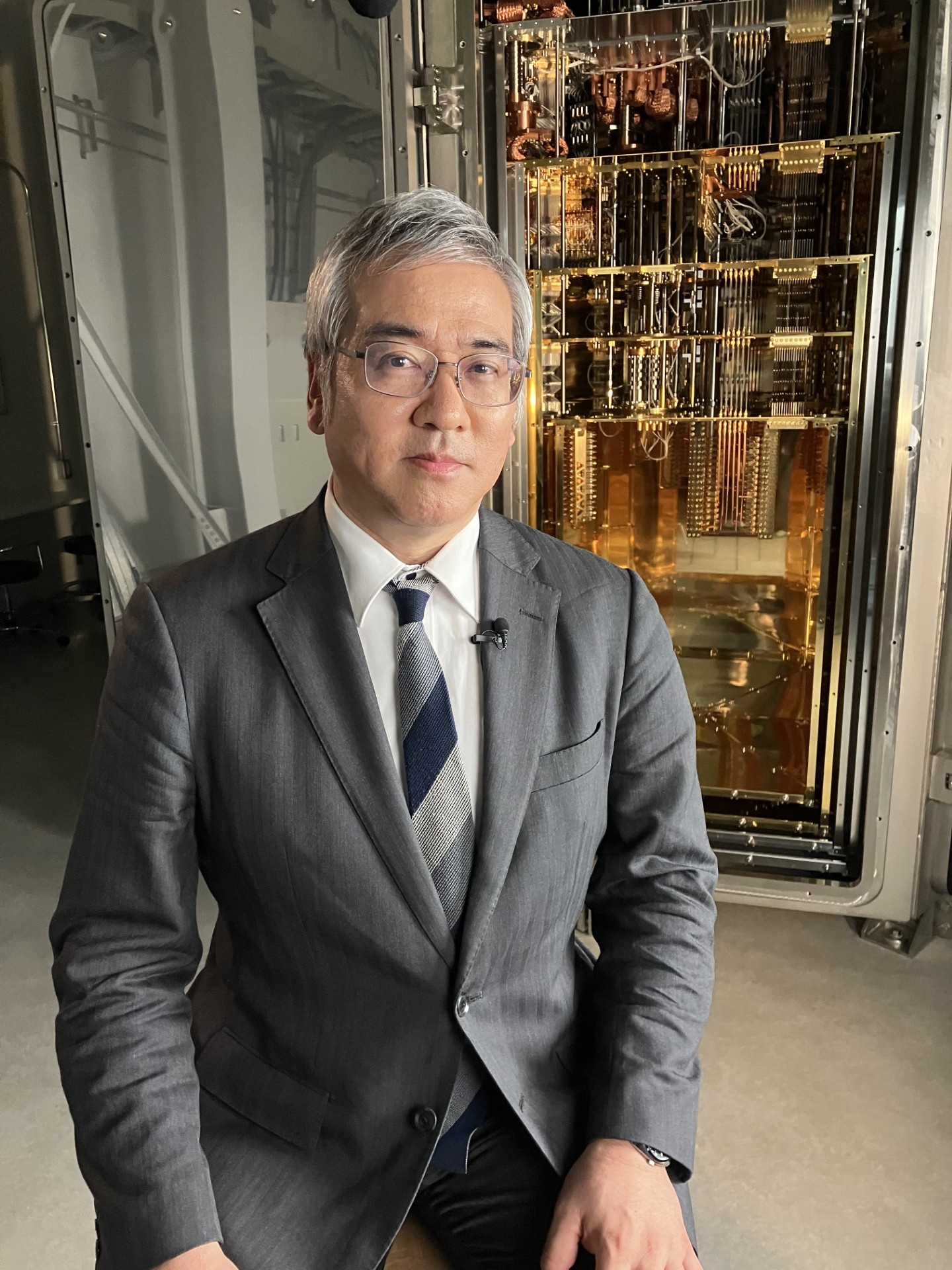
Masahiro Horibe
It is valuable because it brings together two distinct but deeply complementary strengths. The EU brings strong capabilities in quantum algorithms and theoretical research, while Japan excels in hardware and precision engineering. By combining these complementary strengths, the partnership can tackle challenges that neither side could address alone — particularly in integrating quantum computing with high-performance computing (HPC).
This is especially valuable in Q‑Neko, where bridging theory, hardware, and system-level integration is essential. Early international collaboration also positions both regions to shape future standards and co-develop the ecosystem, while sharing risks and enabling large-scale development.
Q‑Neko sits at the intersection of quantum computing and high-performance computing. Where do you see the most immediate opportunities for real-world impact?
Mikael Johansson
The most immediate opportunity is in building practical hybrid workflows that allow researchers and companies to use quantum processors together with today’s supercomputers. From the perspective of CSC, this is a very natural direction: our role is often to help turn advanced computing technologies into usable services for research and innovation.
In the near term, the impact will come from learning how quantum resources can be integrated into existing HPC workflows. That includes developing software interfaces, scheduling approaches, benchmarking methods, and application pipelines that make hybrid computing easier to test and evaluate.
Promising application areas include materials modelling, chemistry, optimization, and machine learning-related workloads. The infrastructure layer is equally important. If we can make quantum resources accessible through familiar HPC environments, we lower the barrier for users and accelerate experimentation. That is where Q-Neko can have a strong practical impact.
Masahiro Horibe
At Q-Neko, we focus not just on advancing quantum computers in isolation, but on making quantum useful now — through hybrid computing that combines quantum and supercomputing, rather than waiting for full quantum advantage.
This approach enables us to address real-world challenges that quantum alone cannot yet solve, such as materials discovery, drug design, and large-scale optimization problems.
G-QuAT, the initiative I am part of, contributes strongly in integrating quantum technologies with HPC and AI. By acting as a bridge between research and industry, G-QuAT helps bring the outcomes of EU collaboration into practical use in Japan, accelerating real-world impact.
What are the main scientific or collaboration challenges you anticipate, and how is the project designed to address them?
Masahiro Horibe
Quantum technologies present significant technical challenges, including noise-induced instability and limited scalability. In addition, international collaboration introduces challenges such as differences in research culture, institutional frameworks, and the need for alignment on data sharing and intellectual property.
Q-Neko is designed to address these through a combination of distributed research and integrated platforms, allowing different expertise to be developed in parallel while ensuring interoperability. Shared benchmarking standards help create a common evaluation framework, and continuous researcher exchange supports alignment across teams.
G-QuAT sees strong potential to contribute particularly in implementation and evaluation, helping to translate these frameworks into practical workflows and robust assessment criteria.
Mikael Johansson
Scientifically, one of the central challenges is that quantum computing and HPC are still very different computing paradigms. They have different performance characteristics, different programming models, and different maturity levels. Bringing them together requires much more than connecting machines. It requires careful co-design across hardware, software, algorithms, applications, and user workflows. We need to understand whether the complete workflow becomes more useful, more accurate, more scalable, or more efficient for real-world applications. That makes benchmarking and evaluation particularly important.
On the collaboration side, the challenge is to make sure that teams working across Europe and Japan remain aligned despite differences in geography, research traditions, and institutional settings. Q-Neko addresses this through a clear project structure and regular interaction between the partners. Personally, I see researcher exchange and joint work on demonstrators as especially important, as they help ensure that collaboration is not only formal, but genuinely practical.
From CSC’s point of view, one of our contributions is to help connect the scientific work to operational computing environments and user needs. That helps keep the project focused on solutions that can eventually be deployed, tested, and reused by broader communities. We also need to be prepared to change the way that services are provided. The classical way of providing compute infrastructure is not necessarily optimal when adding quantum capacity to the mix. It is crucial to not be overly burdened by legacy; we need to be flexible!
Looking ahead, what would success for Q‑Neko look like by the end of the project—both in terms of technology and long-term EU–Japan cooperation?
Mikael Johansson
Technically, success would mean that Q-Neko has produced credible, reusable building blocks for hybrid HPC+AI+QC computing. This would include tested workflows, software components, benchmarking practices, and application demonstrators that show how quantum computing can accelerate HPC in a meaningful way.
Thus, a successful outcome will most likely not be a single breakthrough result. It would be a foundation that others can build on: clearer understanding of where quantum resources add value, better tools for integrating them with supercomputing environments, and practical lessons from real use cases. For CSC, success also means making the technology more accessible to researchers and application developers, not only to quantum specialists.
In terms of cooperation, success would mean that Q-Neko becomes more than a one-off project. I hope the project will create lasting relationships between European and Japanese institutions, support future joint initiatives, and contribute to shared approaches across many areas, such as interoperability, benchmarking, training, and standards. If, by the end of the project, we have a stronger Japan-Europe community working together on driving hybrid computing even further, that would be something to be proud of.
Masahiro Horibe
The outcomes we expect go well beyond research results alone. On the technical side, a key milestone is establishing practical computing workflows that integrate quantum and HPC in a meaningful way. Demonstrated results in specific industrial sectors, such as materials science or optimization, will also be a clear measure of success.
Looking further ahead, we aim to build a strong and lasting research network between the EU and Japan — one that evolves into next-generation projects and contributes to emerging standards in quantum-HPC integration. Developing quantum talent capable of making an impact on the global stage is another outcome we see as central to the project’s long-term value.
What excites you most personally about being involved in this initiative?
Masahiro Horibe
What excites me most about this initiative is the opportunity to be part of a genuine inflection point — where quantum technologies move beyond theory and experimentation, and begin solving real industrial challenges.
In fields like materials development, drug discovery, and logistics optimization, new computational approaches combining quantum and HPC are already being applied to problems that were previously out of reach. To me, this represents a meaningful shift: from quantum as a technology of the future to one that can deliver practical value today.
The combination of EU and Japanese strengths adds another dimension. By advancing both algorithmic and hardware aspects together, this collaboration has the potential to unlock breakthroughs that neither side could achieve alone.
Personally, what I find most exciting is being able to contribute at the point where research meets real-world application — translating advanced technologies into something that society can actually use. Being part of building that bridge, and helping shape the technological foundation for the future, is what makes this opportunity especially meaningful to me.
Mikael Johansson
It is highly motivating to already now see how we are solving both practical problems and more future-looking challenges together, across continents, within Q-Neko. As coordinator, I could not be happier with the collaboration that is already in full swing. The drive for achieving the goals of the project can be seen in every meeting, be it related to solving some very specific technical challenge or higher-level discussions on, say, resource sharing. Everyone involved is committed to making this a success story.
Q-Neko is exciting because it is not only about exploring quantum computing as a future technology. It is about asking very practical questions: How can researchers access each other’s quantum resources? How will quantum computers work together with traditional supercomputers? What kinds of workflows make sense? What can we learn from each other? In essence, what will a quantum-enhanced future world look like?
The international aspect makes the project especially meaningful. Working with Japanese partners brings new perspectives and a shared sense that this field must be developed collaboratively. Being part of a project that connects scientific ambition with long-term cooperation for a brighter future is both professionally and personally rewarding.